Building Entrances
A commercial system may be used to control access to main building entrances, employee entrances, offices, warehouses, storage areas, equipment rooms, restricted departments, gates, and other controlled parts of a property.
Mark Sandmann provides commercial access control installation in Houston for businesses that need to control who can enter specific doors, buildings, offices, storage areas, and restricted parts of a property.
Call (832) 795-9163Access control gives a business a way to manage who can enter specific doors or areas without relying only on traditional keys.
Mark holds Texas DPS Security License B12722101 and is licensed for electronic access work. When you call, you speak directly with Mark about the property, the doors you need to secure, who needs access, and how you want the system to work. Mark helps determine the practical approach and performs the work himself.
The right system depends on the number of doors, the people who need access, the existing door hardware, the building layout, the network infrastructure, and how the business wants access to be managed.
Mark Sandmann holds Texas DPS Security License B12722101. The Texas Department of Public Safety regulates the private security profession in Texas, including electronic access work.
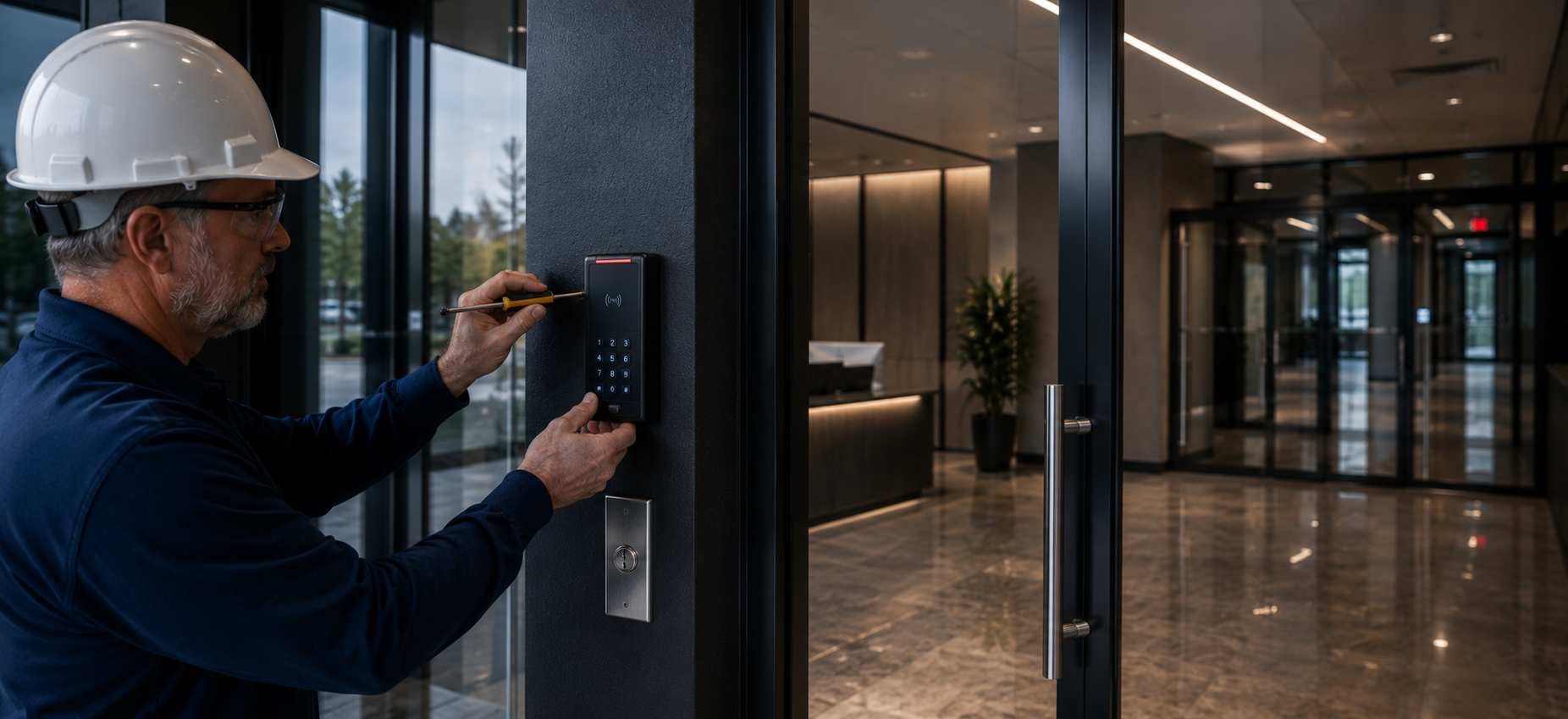
When you contact Mark Sandmann, you speak with the person who will help evaluate the access control project and perform the work.
You do not need to know which reader, credential type, controller, locking hardware, or cabling approach you need before calling. Start by explaining which doors need to be controlled, who should have access, and whether the property already has an access control system.
Mark's experience includes access control, security cameras, structured cabling, network installation, switches, routers, fiber optic networks, and related security infrastructure. This helps him look at the full system rather than treating the reader, lock, cabling, and network as separate problems.
A commercial system may be used to control access to main building entrances, employee entrances, offices, warehouses, storage areas, equipment rooms, restricted departments, gates, and other controlled parts of a property.
The right system depends on the number of doors, the people who need access, the existing door hardware, the building layout, the network infrastructure, and how the business wants access to be managed.
Mark works with businesses, property managers, contractors, and other decision-makers who need a new access control system, additional controlled doors, upgrades, troubleshooting, or changes to an existing installation.
Card readers allow authorized users to unlock controlled doors using an approved credential instead of a traditional key. A card reader installation may involve the reader, control equipment, locking hardware, door position devices, request-to-exit components, power, and cabling.
Key fobs provide a convenient credential for employees, tenants, contractors, or other approved users. Access can be managed through the system instead of replacing physical keys whenever a user should no longer have entry.
Keypads allow access through an assigned code or PIN. Depending on the property and security requirements, a keypad may be used alone or together with another credential method.
Some access control systems can use mobile credentials that allow approved users to access controlled doors through a compatible smartphone. The practical setup depends on the access control platform, hardware, network, and how the business wants credentials to be managed.
Businesses with several controlled doors need a system that can manage access across different entrances and restricted areas. A multi-door project may include main entrances, employee-only doors, warehouse access points, offices, storage rooms, equipment rooms, and other restricted areas. Mark can review how the doors relate to each other and how the business wants different users to move through the property.
An existing system may need to grow as the business adds doors, departments, employees, buildings, or restricted areas. Before expanding the system, the existing controller capacity, cabling, network, power, door hardware, and software platform should be considered.
An older access control system may become difficult to manage, may not support the features the business needs, or may no longer fit the way the property is used. Mark can review the existing installation and help determine whether the practical next step is to replace specific components, add doors, update supporting infrastructure, or make broader system changes.
Access control problems can involve more than the reader on the wall. A problem may involve the credential, the reader, the controller, the locking hardware, the door position device, the request-to-exit device, power, cabling, the network connection, or system configuration. Because Mark works across both security and network infrastructure, he can evaluate the system and the connections supporting it.
Electric strikes are used in some access control installations to release a door when an authorized credential is presented. The correct setup depends on the door, frame, existing hardware, and life-safety requirements.
Magnetic locks may be used in certain controlled-entry applications. The door, power, release devices, egress requirements, and overall system design all need to be considered before installation.
A door position device can help the system determine whether a controlled door is open or closed. This may be useful when the business needs to know if a door has been left open or is not in the expected position.
Request-to-exit devices are used in some controlled-door systems to allow authorized or required egress from the secured side of a door. The correct device depends on the door and the access control design.
Office access control may be used at main entrances, employee-only areas, executive offices, IT rooms, storage spaces, and other restricted parts of the building.
Warehouses may need controlled access at employee entrances, offices, loading areas, equipment rooms, storage areas, gates, or other parts of a large property. The physical distance between doors and the location of network and control equipment can affect the installation.
Industrial properties may have multiple buildings, restricted operational areas, equipment locations, and controlled entry points spread across a larger site. These projects may require access control hardware, structured cabling, network infrastructure, and fiber connections between major areas.
Retail properties may use access control for employee entrances, offices, stock rooms, cash-handling areas, equipment rooms, and other spaces that should not be open to the public.
Property managers may need access control for building entrances, common areas, gates, offices, equipment rooms, and other shared or restricted spaces.
A new system starts with the doors that need to be controlled and the people who need access. The project may include door readers, cards, fobs, codes, or mobile credentials, controllers, electric locking hardware, door position devices, request-to-exit devices, power supplies, structured cabling, network connections, and management software.
Before adding a controlled door, the existing system needs to be reviewed. The controller, software platform, network, cabling, power, and current hardware may affect what can be added.
Businesses may replace older systems because they are difficult to manage, unreliable, limited in features, or no longer suitable for the property. Mark can review the existing setup and help determine which components can remain and which parts need to change.
Start by explaining which doors need to be controlled, who uses them, and what the business needs to prevent or manage.
The door, frame, locking hardware, cable pathways, power, network, and existing security systems can all affect the project.
Mark helps determine the readers, credentials, control equipment, locking hardware, and supporting infrastructure needed for the project.
Mark performs the agreed installation work himself, so you communicate directly with the person doing the work.
The credential is only one part of an access control system.
A complete controlled-door setup may include a card reader or keypad, a credential such as a card, fob, code, or mobile credential, a controller, electric locking hardware, a door position device, a request-to-exit device, power, cabling, network connectivity, and access management software.
The exact combination depends on the door, the building, the security requirement, and how the business wants access to be managed.
Access control is often one part of a larger commercial security system.
A complete setup may include door readers, controlled locking hardware, security cameras, structured cabling, network switches, controllers, remote management, and fiber connections between major areas.
Because Mark works with access control, security cameras, structured cabling, and network infrastructure, he can consider how the systems fit together.
Related services: Security Camera Installation in Houston and Structured Cabling Installation in Houston.
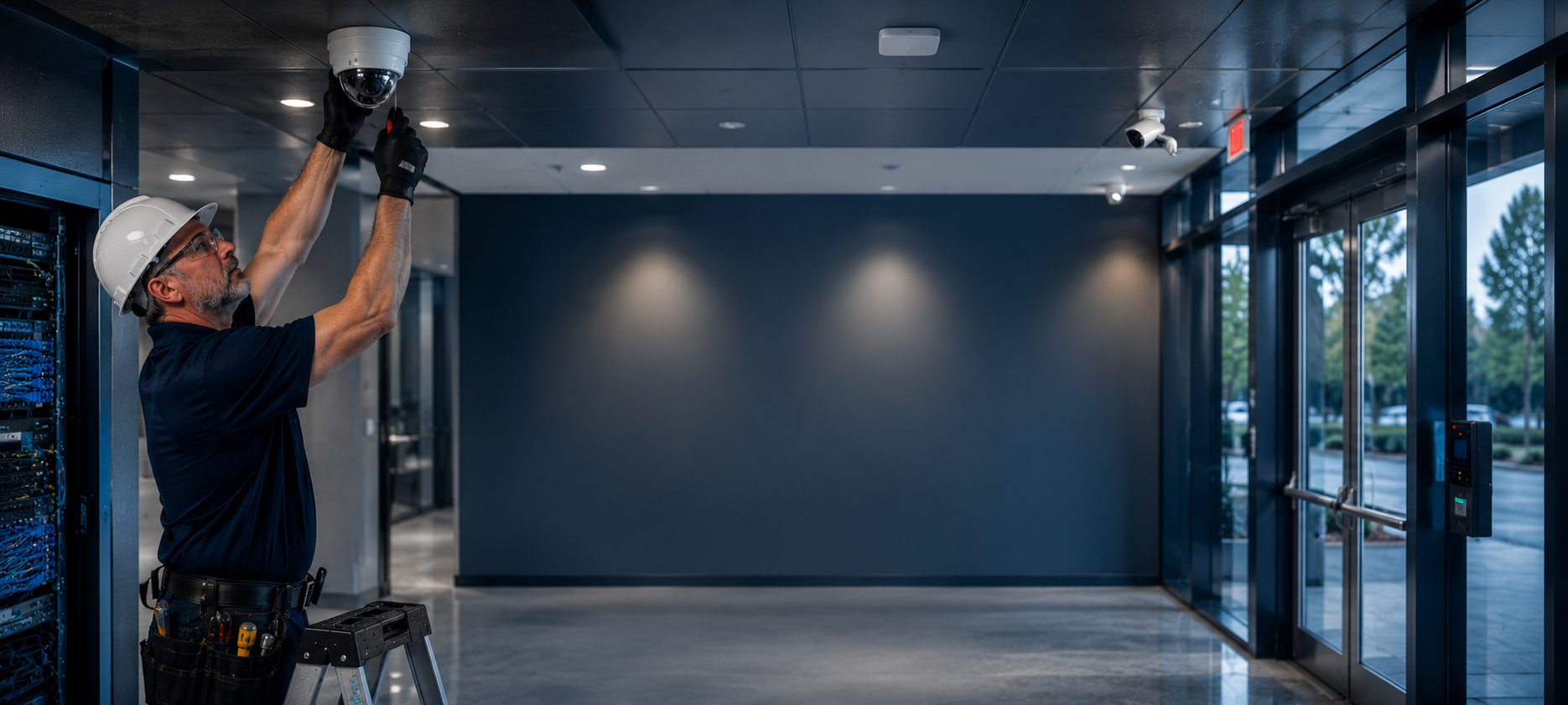
Access control tells the system who was granted or denied entry. Security cameras provide video of what happened around the door or area.
These systems solve different problems, but businesses often use them together as part of a larger security plan.
Mark works with both systems and can consider the camera coverage, door hardware, cabling, network, and controlled-entry requirements within the same property.
Mark is based in Houston and provides commercial access control installation throughout the Houston area.
Projects may range from controlling a single important door to installing or expanding a multi-door system for an office, warehouse, industrial facility, managed property, or other commercial location.
Have a project elsewhere in Texas? Contact Mark to discuss the location and scope.
Mark is available 24 hours a day for urgent network and security system issues. If an important controlled door or part of the access system stops working, call and explain what is happening. Mark can help determine the practical next step.
Yes. Mark Sandmann installs commercial access control systems for businesses and commercial or industrial properties throughout the Houston area.
Yes. Mark Sandmann holds Texas DPS Security License B12722101 and is licensed for electronic access and other regulated security work.
Yes. Access control projects may include card readers, key fobs, keypads, mobile credentials, controllers, locking hardware, and related system components.
Yes. Mark can review the existing system and help determine whether additional controlled doors can be added and what controller, cabling, network, power, or hardware changes may be needed.
Yes. Mark can help troubleshoot problems involving readers, credentials, controllers, locks, door position devices, request-to-exit devices, power, cabling, network connections, or system configuration.
Yes. Access control and security cameras are separate systems, but businesses often use them together so controlled-entry activity can be supported by video coverage.
Yes. Mark also works with structured cabling and network infrastructure, including the connections that support commercial access control systems.
You will work directly with Mark Sandmann. Mark discusses the project with you, helps determine the practical approach, and performs the work himself.
Houston, Texas
Texas DPS Security License
B12722101
Available 24 hours, Monday through Sunday
Share a few details about the service you need and the best way to reach you.